Loading...
Skip to Content

Professional Piano Voicing
on Long Island

Paul's Pianos > Professional Piano Voicing In Long Island

Even the best instruments can lose their tonal beauty over time. Felt hammers harden, grooves deepen, and the tone can become uneven, harsh, or dull. At Paul’s Pianos, we provide professional piano voicing across Long Island. We help pianists bring clarity, warmth, and balance to their sound. Whether you want a brighter, more brilliant tone for jazz or a warm, mellow voice for romantic classical pieces, we customize each instrument to meet the needs of the musician and the acoustics of the room.

Piano Voicing on Long Island

What Is Piano Voicing?

Voicing shapes the tone. While tuning ensures correct musical pitch, voicing adjusts how the piano sounds and responds by refining the condition of the hammer felt. Which allows:

Soundboard
Reduce harshness or excessive brightness

Pinblock
Add warmth, depth, and richness
Action
Balance tone across the full keyboard
Keyboard
Increase dynamic control and expression
Cabinet
Customize tone to fit the pianist’s preferences

Two perfectly tuned pianos can sound dramatically different. Voicing is what makes one piano smooth and rich while another sounds sharp or brittle.

Piano Action Repairs & Regulation

Signs Your Piano May Need Voicing

You may benefit from voicing if:

  • Some notes sound brighter or duller than others
  • Tone has become harsh, metallic, or thin
  • You struggle to control soft playing or expressive dynamics
  • Your piano has been heavily used or recently restored
  • The instrument sounds different after being moved
  • You want a more personalized sound for your playing style

Even new or high-quality pianos sometimes need voicing to optimize tone.

Our Piano Voicing Process

We take pride in meticulous craftsmanship and thoughtful consultation. Each voicing appointment includes:

Tone Analysis & Assessment
1. Tone Analysis & Assessment

We listen to the piano in its environment and evaluate hammer condition, regulation, and tuning.

Tonal Goal Discussion
2. Tonal Goal Discussion

We play scales and chords together, identifying how you want your piano to sound brighter, warmer, more balanced, or more expressive.

Hammer-Felt Refinement
3. Hammer-Felt Refinement

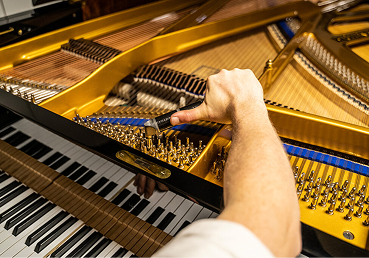
Using techniques such as needle voicing, felt reshaping, filing, and density adjustments, we precisely sculpt the tone without damaging the hammer.

Final Testing & Demonstration
4. Final Testing & Demonstration

You’ll hear the improvement immediately, and we offer fine adjustments to ensure you’re delighted.

Expert Care Recommendations
5. Expert Care Recommendations

We provide guidance on maintaining tone and expected re-voicing frequency.

We ensure stability, performance, and balanced tone, and provide care guidance for optimal longevity.

Book a Piano Voicing Appointment

FAQs

What’s the difference between piano repair and piano rebuilding?

Piano repair usually focuses on single problems, like fixing a broken hammer, replacing strings, or fixing sticky keys. Rebuilding, on the other hand, is a complete restoration process. It involves taking the piano apart and repairing or replacing major parts, such as the soundboard, pin-block, action, strings, and cabinet. Rebuilding is advised when the piano shows significant wear or structural damage. The goal is to restore the instrument to a “like-new” condition in terms of performance and sound.

A complete rebuild may take between 4 and 12 weeks, sometimes longer, based on the condition, age, and need for structural work. This process includes disassembling, cleaning, repairing the structure, replacing worn parts, refinishing, assembling, voicing, and multiple tunings. Fine pianos require time for the materials to settle between steps. Rushing through this process can harm tuning stability, tone quality, and long-term durability.

Generally, the answer is yes, especially if the piano is a high-end brand like Steinway, Mason & Hamlin, Baldwin, Yamaha, or vintage European handcrafted models. Many older pianos were built with quality craftsmanship and solid materials that surpass today’s manufacturing standards. Rebuilding maintains the instrument’s value, extends its lifespan by decades, and restores the unique character and rich sound quality that are often missing from newly made pianos.

If your piano won’t stay in tune, has an uneven or dull tone, makes buzzing or rattling sounds, has sticky or uneven keys, shows a cracked soundboard or bridges, or has visible damage, rebuilding might be necessary. Severe cabinet wear, old or rusted strings, and slipping tuning pins are also signs to consider. Rebuilding is usually more cost-effective than making repeated repairs when multiple parts fail at the same time.

A complete assessment is the first step in the rebuilding process. Next, the piano is taken apart, cleaned, and inspected. Structural parts like the soundboard, pin-block, and bridges are fixed or replaced. New hammers, dampers, and other parts are added to the action when needed. The piano is put back together, adjusted, voiced, and tuned in several stages, and the cabinet finishes are restored. When finished, the piano plays, looks, and sounds like new, often surpassing the original factory standards.